

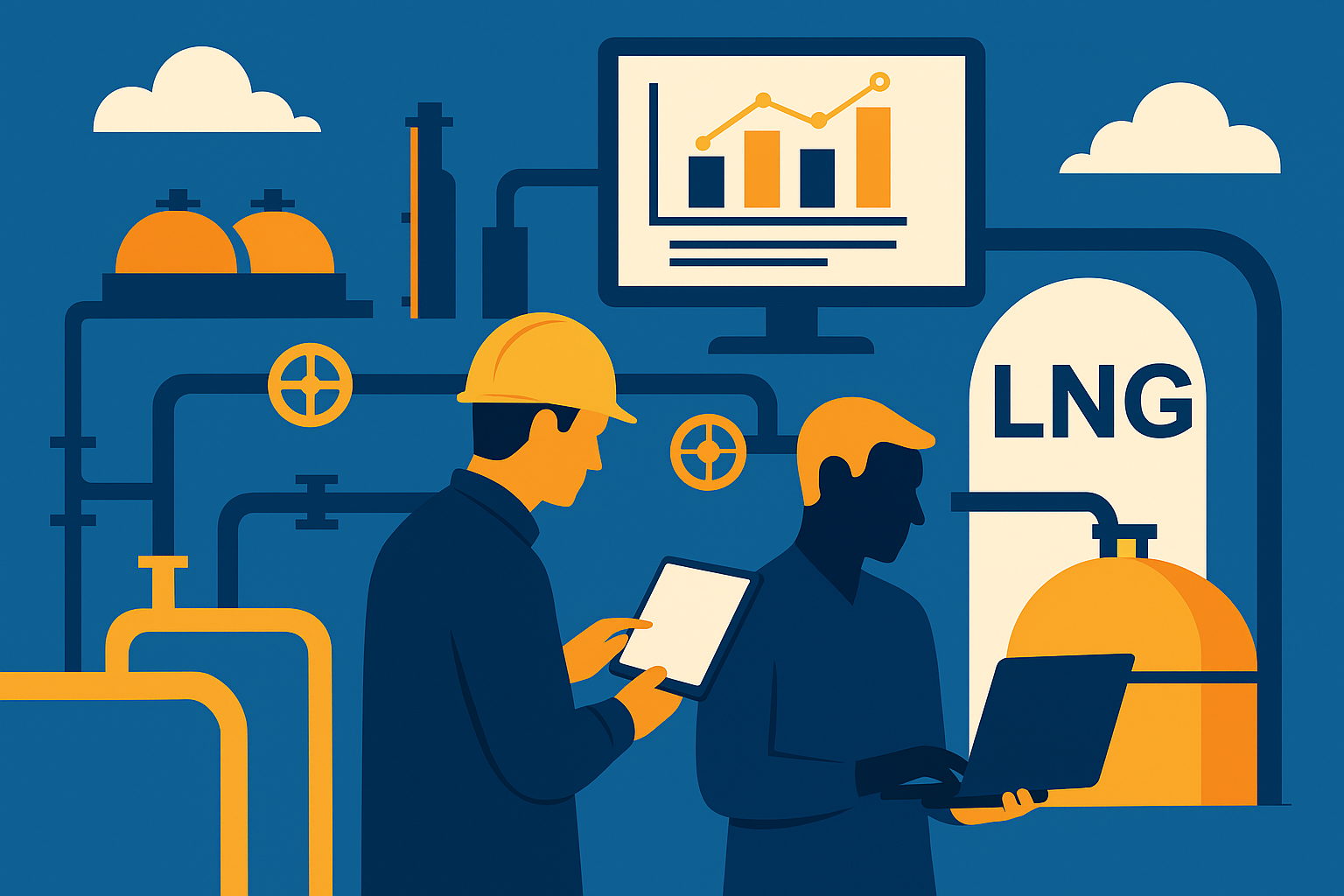
LNG & Pipeline Gas Hydrocarbon Accounting Management Training Course
Course Code : 1005
LNG & Pipeline Gas Hydrocarbon Accounting Management Training Course
Course Code : 1005
This practical and industry-focused course is designed to empower LNG and Pipeline Gas (PG) professionals with the technical knowledge and tools needed to implement, manage, and improve hydrocarbon accounting processes. Covering core concepts such as measurement, sampling, allocation, data validation, inventory tracking, and software tools, the course emphasizes operational accuracy, audit-readiness, and seamless reporting. With real-world exercises and scenario-based workshops, participants will gain hands-on experience managing hydrocarbon flows, reconciling discrepancies, and using accounting insights to support daily operations.
Whether you're new to the field or seeking to refine your skills, this course provides a structured, end-to-end understanding of how LNG and PG accounting supports operational transparency, regulatory compliance, and informed decision-making.
Course Highlights
LNG & PG Supply Chain Fundamentals
Gain a structured understanding of how LNG transitions into pipeline gas and how hydrocarbon movements are measured, monitored, and recorded along the downstream value chain.Measurement & Sampling
Learn about the metering infrastructure, measurement standards (API/ISO), and sampling techniques that underpin accurate volume and energy calculations.Allocation Techniques
Understand the difference between energy- and volume-based allocation. Learn how to apply allocation logic in shared terminal, tank, or pipeline environments.Data Validation & Discrepancy Management
Develop practical skills in identifying and resolving data anomalies, performing inventory reconciliations, and documenting discrepancies in a transparent, auditable manner.Inventory Tracking & Linepack Management
Learn best practices in LNG tank inventory and PG linepack accounting, including how to track boil-off gas, shrinkage, and movement between systems.Software Tools in Hydrocarbon Accounting
Familiarize yourself with commonly used systems (e.g., Energy Components, SAP IS-Oil, eVIN) and how they are configured to manage daily data processing and reporting.KPI Dashboards & Reporting
Build understanding of key accounting KPIs (e.g., accounted volume %, gain/loss %, variance trends), and how to generate meaningful reports for internal and external stakeholders.Workshops & Simulations
Apply your knowledge through scenario-based workshops covering allocation exercises, discrepancy investigation, and full-chain reporting simulations.
Key Takeaways
Understand the complete hydrocarbon accounting lifecycle across LNG and PG downstream operations.
Learn how to measure, allocate, and reconcile gas and LNG flows with international best practices.
Gain hands-on experience with data validation, loss/gain analysis, and inventory reconciliation.
Improve your ability to troubleshoot discrepancies and maintain audit-ready documentation.
Familiarize yourself with key software platforms and how they support daily accounting tasks.
Build skills in preparing daily/weekly/monthly reports and communicating insights clearly.
Understand operational KPIs and how they reflect system performance and data quality.
Enhance your value to your team by bridging operations, commercial needs, and regulatory reporting.
Course Agenda – Day 1 to 3
Day 1: Fundamentals, Measurement, and Supply Chain Context
Session 01: LNG & PG Value Chains
· From production to regasification and pipeline integration
· Commercial contracts and implications for accounting
Session 02: Core Hydrocarbon Accounting Principles
· Key concepts: volume, energy, mass balance
· Accounting objectives across terminal and pipeline operations
Session 03: Metering and Measurement
· LNG and PG metering types and best practices
Session 04: Laboratory Sampling & Data Conversion
· GC analysis and energy content calculations
· Integrating lab and metering results for reporting
Workshop – Supply Chain Mapping & Data Flow
· Participants sketch out supply chain nodes and metering points
· Identify inputs/outputs for hydrocarbon accounting
Day 2: Allocation, Validation, Inventory, and Discrepancies
Session 05: Allocation Techniques for LNG and PG
· Energy-based vs. volume-based methods
· Allocating shared pipeline or LNG terminal volumes
Session 06: Data Validation and Error Handling
· Detecting anomalies and resolving data gaps
· Automating validation and maintaining audit trails
Session 07: Inventory and Linepack Management
· Inventory practices in tanks and Pipelines gas Line Pack
· Managing LNG boil-off and PG shrinkage
Session 08: Discrepancy Analysis and Reporting
· Identifying and classifying loss/gain
· Creating variance reports and documentation
Workshop – Allocation and Reconciliation Simulation
· Hands-on exercise: balance, allocate, and investigate discrepancies
Day 3: Tools, Reporting, KPIs, and Future Technology
Session 09: Software Tools for Hydrocarbon Accounting
· Energy Sys, Energy Components, Babelfish, Quintiq and other tools
· Configuring rules and generating reports
Session 10: Operational Reporting – Daily to Monthly
· Structure of typical reports
· Managing schedules, exceptions, and handovers
Session 11: KPI Dashboards and Internal Controls
· Tracking performance and ensuring transparency
· Examples of operational and compliance KPIs
Session 12: Trends and Technology in Accounting
· Automation,
· Cybersecurity and system integration
Final Workshop – Full-Chain Accounting Exercise
· Scenario walkthrough from delivery to reporting with group feedback
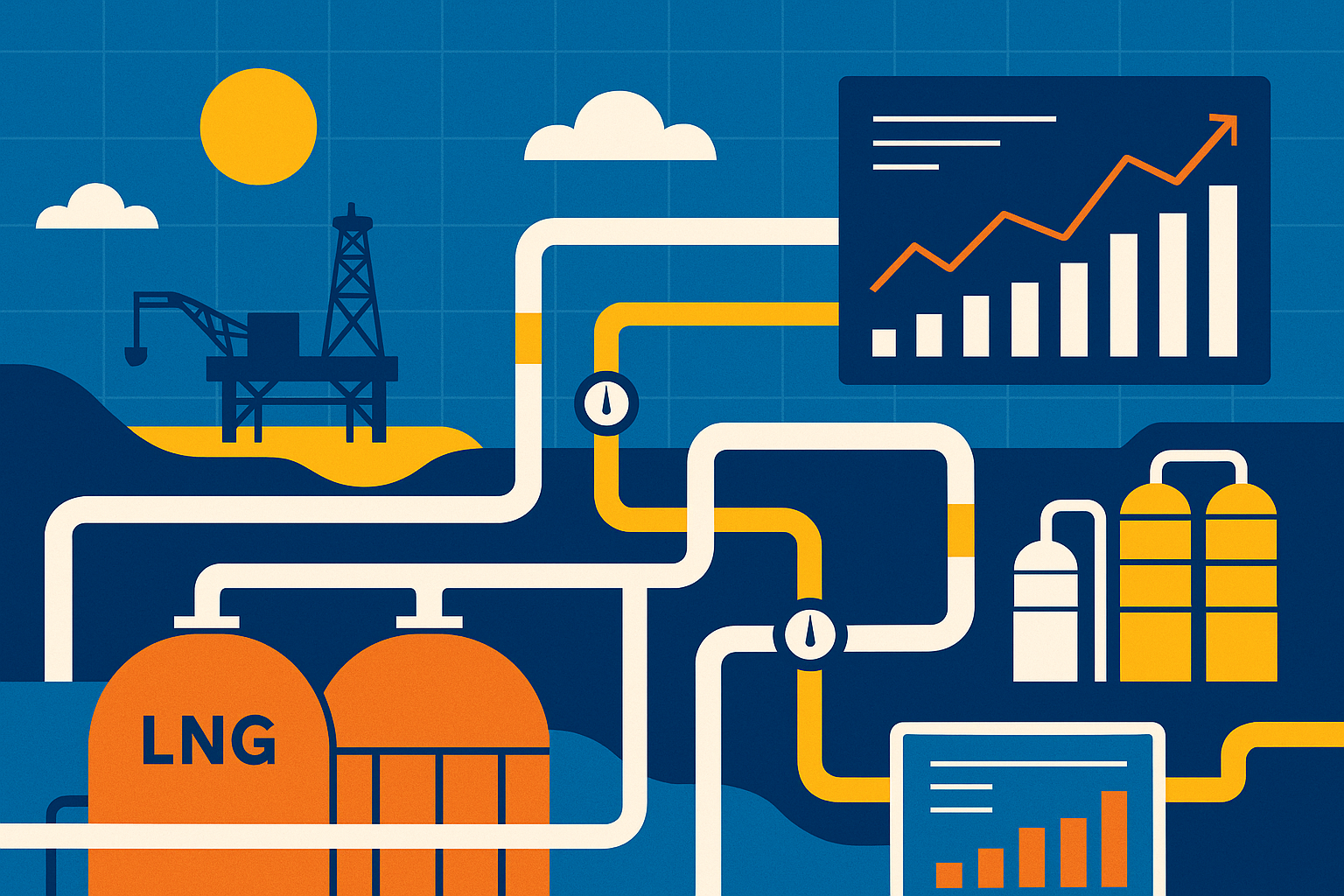
This comprehensive 3-day course equips professionals with the practical knowledge and technical understanding needed to manage hydrocarbon accounting across the LNG and PG value chains. From metering and allocation to inventory, reconciliation, and reporting tools, participants will gain real-world insights and hands-on skills to ensure data integrity, operational accuracy, and commercial confidence.
Join us to build the foundation for transparent, compliant, and efficient hydrocarbon management.