Effective Reporting & Stakeholder Communication
For LNG Production Planning and Cargo Scheduling
Course Code: 1002
Effective Reporting & Stakeholder Communication
This course will help you to Transform raw LNG production data into actionable insights, fostering informed decision-making, transparent communication, and performance optimization. This course goes beyond the basics, exploring critical production parameters, hydrocarbon accounting, and the reporting of production outages. Additionally, it delves into key performance indicators (KPIs) like availability, utilization, and reliability, providing you with the tools to evaluate and enhance operational efficiency.
Course Highlights:
Key LNG Production Parameters: Identify and understand the essential production parameters influencing reporting and decision-making.
Hydrocarbon Accounting Fundamentals: Master the principles of hydrocarbon accounting for accurate and transparent LNG production reporting.
Production Outages: Learn to categorize and report outages effectively, enabling root cause analysis and proactive mitigation strategies.
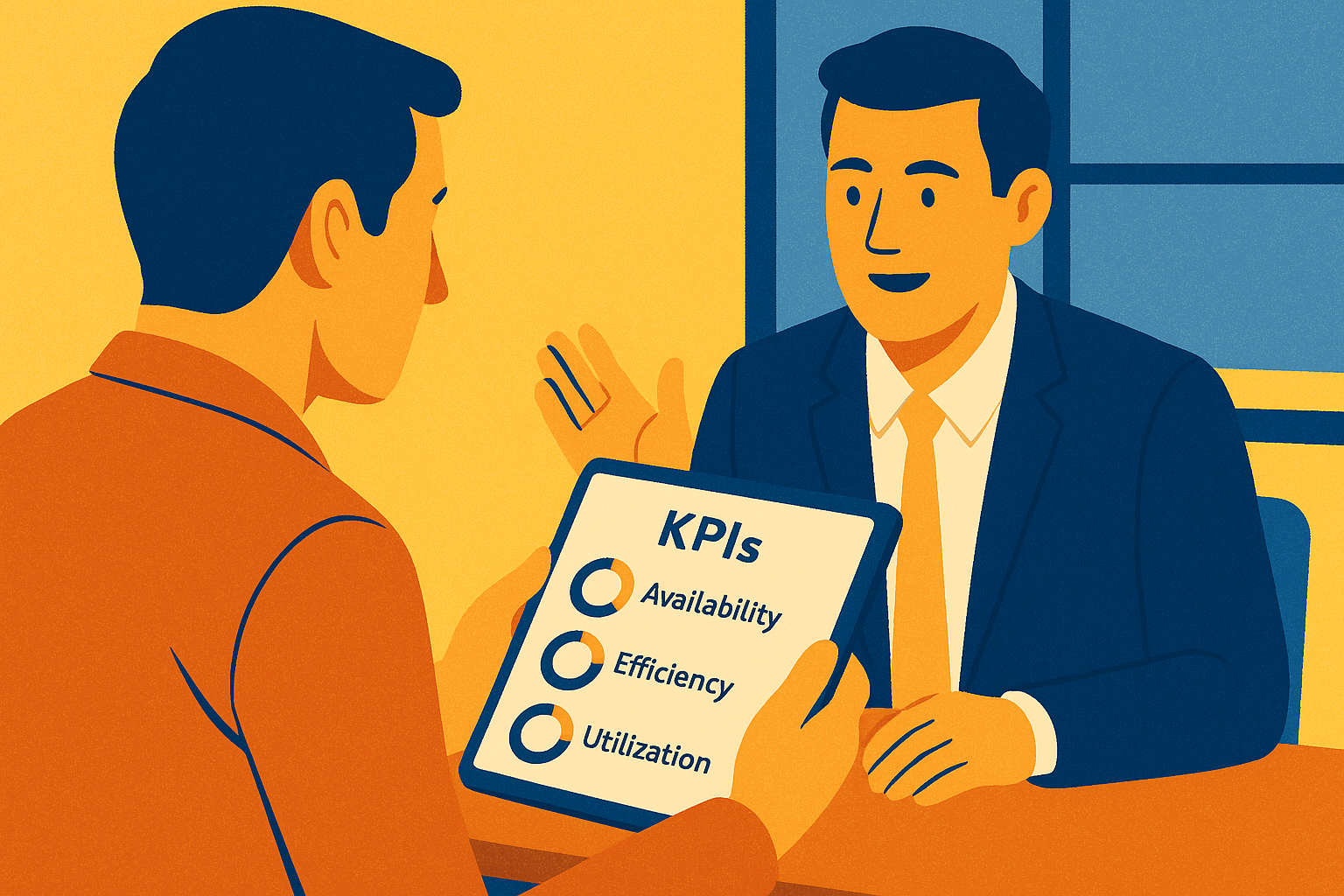
KPIs: Availability, Utilization, and Reliability: Understand these vital metrics, calculate them accurately, and use them to drive performance improvements.
Data Analysis and Reporting: Develop skills to analyze production data, generate meaningful reports, and communicate findings clearly.
Stakeholder Communication: Foster effective communication with internal teams, partners, and external stakeholders, including regulatory bodies.
Sample Reports and Data: Gain practical experience through the analysis of sample production data and reports.
This comprehensive course is invaluable for LNG professionals responsible for production planning, reporting, performance optimization, or stakeholder communication. It equips you with the knowledge and skills to leverage production data for informed decision-making, transparent communication, and continuous improvement across the LNG value chain.
Key Takeaways:
Understand critical production parameters and their impact on reporting and performance.
Master hydrocarbon accounting principles for accurate and transparent reporting.
Effectively categorize and report production outages to enable proactive mitigation.
Calculate and interpret key performance indicators to drive operational efficiency.
Develop data analysis skills and generate insightful reports.
Communicate effectively with internal and external stakeholders.
Enhance decision-making through data-driven insights.
We offer this course at two distinct levels to cater to different skillsets: a General level for beginners and an Advanced level for those seeking a deeper dive.
This course can be fully tailored in both content and duration to suit the specific needs of your project or operational context. Whether you're seeking a general overview or an in-depth technical focus, we can adapt the training to align with your production planning, reporting requirements, and stakeholder engagement objectives across the LNG value chain.
Day 1: LNG Production Parameters & Hydrocarbon Accounting Basics
Session 1: Key LNG Production Parameters
· Identify critical parameters such as throughput, capacity constraints, and storage limits
· Explore impact of operational modes (single-train vs. dual-train) on planning
· Understand daily variability in feed gas and how it affects forecasting and reporting
Session 2: Hydrocarbon Accounting Fundamentals
· Define metering boundaries and custody transfer points
· Apply energy-based vs volume-based calculations in accounting
· Link HCA outputs to reporting structures and reconciliation
Session 3: Production Outages – Categorization & Impact
· Distinguish between planned, unplanned, and avoidable outages
· Assign codes and categorize in alignment with operations and RCA practices
· Evaluate the impact of outages on availability and delivery timelines
Day 2: KPI Mastery & Performance Reporting
Session 4: KPIs – Availability, Utilization, and Reliability
· Define the boundaries and formulae for each KPI clearly
· Use historical datasets to compute and benchmark performance
· Identify common errors in KPI interpretation and misuse
Session 5: Data Analysis and Report Generation
· Clean and validate daily production data for reporting accuracy
· Use pivot tables and templates to generate structured reports
· Interpret key signals from trends and explain anomalies
Workshop A: Daily & Weekly Operations Summary
· Create a daily production dashboard from provided data and write a weekly narrative including KPI trends and outage summaries.
Day 3: Stakeholder Alignment & Sample Data Analysis
Session 6: Stakeholder Communication & Compliance
· Structure daily/weekly/monthly reports for different stakeholders (Ops, JV, Regulator)
· Include change logs, commentary, and contextual notes to explain deviations
· Prepare audit-ready documentation using standardized templates
Session 7: Sample Reports and Hands-on Data Review
· Review and critique real-life (anonymized) production reports
· Simulate variance investigation: compare planned vs. actual delivery
Workshop B: Stakeholder-ready Monthly Pack
· Compile a full monthly report set with KPI dashboard, RCA summary, and commentary for lifters, JV partners, and management.